 |
||
|
Follow @Nazlina
Types of LaksaIn Malaysia, there are many types of laksa. Laksa is one of the most popular foods you can find in Malaysia. If the Italians have pasta with its variety of sauces and ways of preparation, Malaysians have laksa. The word originates from the Sanskrit term : lakh (meaning ten thousand), this refers to a large variety of ingredients used in order to make the dish.
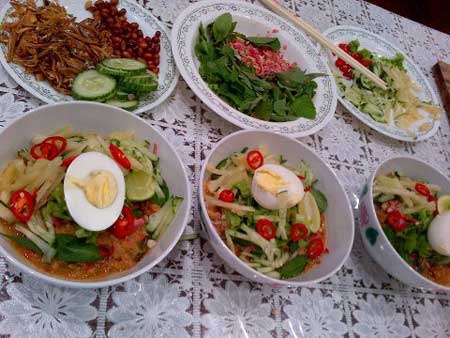
It is basically noodles (made of rice or wheat) served with a special gravy. Each state in the country boasts of its own version. One thing in common about each type is, besides having fish as the main ingredient, the gravy is rich in herbs and spices, and the garnishing also includes generous amounts of chillies, raw herbs, fresh fruits (especially pineapple) and vegetables. Each laksa dish usually has the following ingredients to be added in :
The aroma of the distinctive laksa leaves (daun kesum), a family of mint, and ginger flower buds (bunga kantan) is unmistakable. The paste is brewed over slow fire with fish stock and the resulting gravy is always served hot with blanched laksa noodles. It is mainly eaten during lunch and tea time. The noodles can be freshly made or dried. There are many types of laksa noodles being used. Sometimes, more glutinous rice powder is added, resulting in slippery smooth noodles. Steaming gravy is poured on the noodles, then raw herbs, spicy garnish and boiled eggs are added on top of the bowl. Prawn paste is drizzled over the soup. Raw vegetables are used as garnish. Cucumber, bean sprouts, long beans, chilies, onion and mint leaves are part of the garnish. It is undisputable that Penang asam laksa is the most famous and commercially hawker's food available everywhere in Malaysia. This type of laksa can be found in almost every street corner, coffee shop and food court. You can also find this dish sold on a pushcart, each with its own guarded recipes. The price is also very cheap, ranging from RM2.50 to RM5.00, depending on the location of the stalls, the quantity and ingredients used to make them. Normally we use chopsticks to eat the noodles. Otherwise, you use fork and soup spoon to eat laksa. 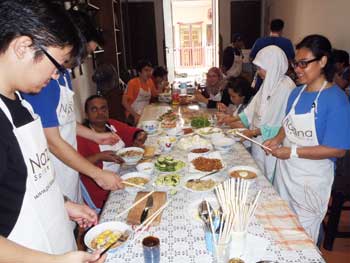
Teambuilding, making and eating laksa Other than Penang, we have Kuala Kedah version (notably uses eels and spicy shredded coconut), Kuala Perlis version, Johor version, Sarawak version (with prawns added) and Pahang version (using spaghetti). Talking about Pahang, click here if you want to know more about food from the largest state in Peninsular Malaysia. This site is owned by my friend Yamin. Below are some of the laksa recipes. So, let us learn how to make these delicacies. Back to the top of Types of Laksa Back to the homepage of Pickles and Spices

Custom Search
|

Custom Search
Nazlina's Cooking Class in Penang
Attend my cooking class to learn making traditional food.
The morning class includes Penang Market Tour.
PLEASE NOTE: We now offer PM classes, for vegan and vegetarians. There are many types of Laksa |
|
|
||
|
|
||
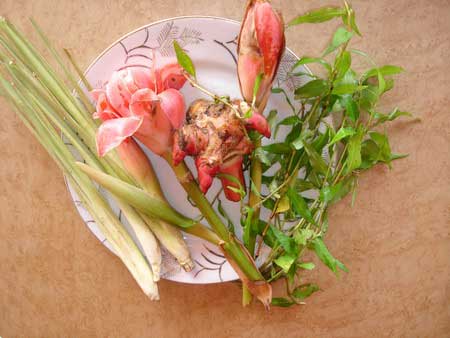
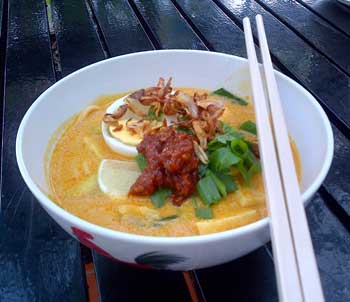 The herbs are usually processed finely with chilies, onion and
garlic and become a paste which is used to make the stock for the gravy.
The herbs are usually processed finely with chilies, onion and
garlic and become a paste which is used to make the stock for the gravy.


New! Comments
Have your say about what you just read! Leave me a comment in the box below.